Built in the Same Factory as the Best
One of the biggest things that sets the S2 series apart is where it’s made. Every S2 guitar is built in PRS’s Maryland factory. That’s the same place where their Core and Private Stock models come to life.
This isn’t outsourced. It’s not a different team. These are the same American craftspeople, working with the same tonewoods and the same attention to detail that PRS is known for.
That alone already separates the S2 line from a lot of guitars in its price range. But the real magic is how PRS makes it all work.
Smarter Manufacturing, Not Cheaper Materials
The S2 series isn’t about cutting corners. It’s about working smarter.
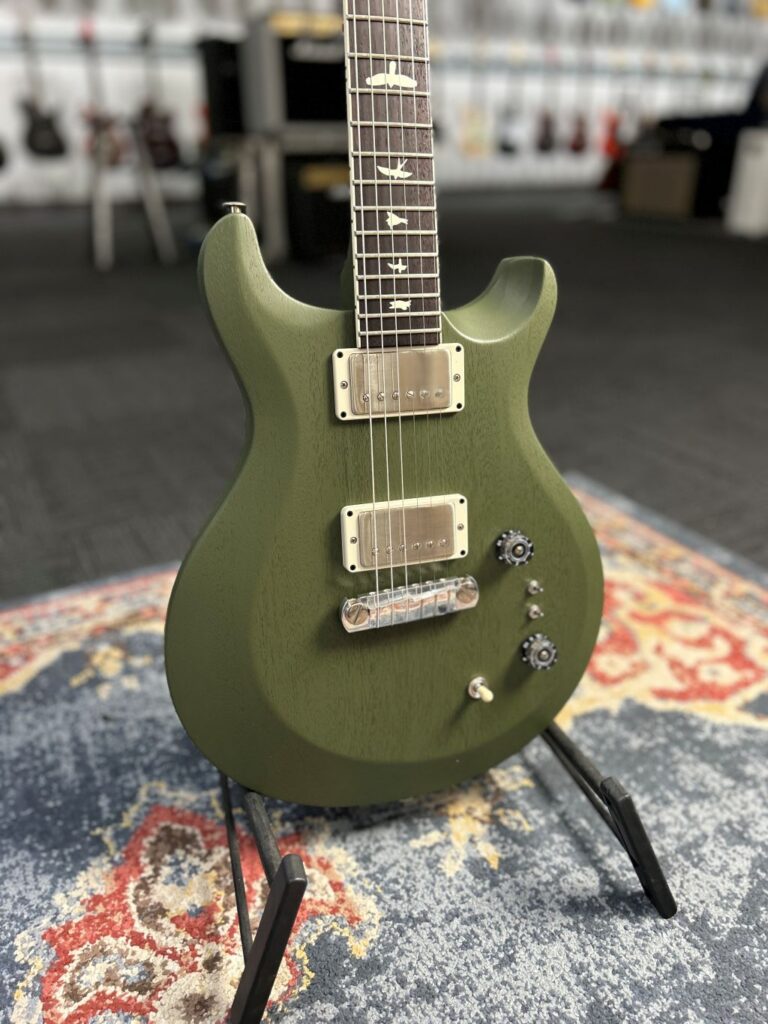
Instead of the deeply carved violin tops you’ll find on Core models, S2 guitars use a flat top with an aggressive asymmetrical bevel. It still looks sleek and modern, and more importantly, it feels great in your hands. But it takes significantly less time to produce.
That one change allows PRS to keep the cost down without sacrificing the quality of the wood or the overall build.
The same idea applies to the neck construction. S2 models use a scarf joint design, which combines multiple pieces of mahogany instead of carving everything from a single block. The result is less wood waste, improved structural stability, and no noticeable compromise in tone or resonance.
It’s a more efficient way to build a guitar, and it works.
The 2024 Upgrade That Changed Everything
For years, one of the biggest differences between the S2 line and the Core models came down to electronics. Earlier S2 guitars used “S” pickups, which were solid, but closer in spec to the SE lineup.
That changed in 2024.
Now, every PRS S2 guitar comes loaded with the exact same USA-made pickups found in their Core counterparts. If you pick up an S2 Custom 24, you’re getting the Maryland-made 85/15 pickups. If you grab a 594, you’re getting the 58/15 LT set.
And it doesn’t stop there. The pots, switches, and jacks are all high-spec USA components as well.
From a performance standpoint, that means the heart of your S2 guitar is identical to instruments that cost significantly more. When you plug in, you’re not getting a “budget version” of anything. You’re getting the real deal.
Nitro Finish That Feels Alive
Another standout feature of the S2 line is the finish.
Instead of the thicker polyurethane coatings you’ll often find on import guitars, PRS uses a nitro finish on the S2 series. It’s thinner, more organic, and allows the wood to resonate more freely.
You feel it immediately. The neck has that smooth, broken-in feel that players love, without the sticky sensation that can come from heavier finishes.
Over time, it gets even better. Nitro naturally ages and settles into the grain, giving the guitar a worn-in character that evolves the more you play it.
It’s one of those details you might not think about at first, but it makes a huge difference once you experience it.
The PRS S2 Vela HHT: A Perfect Example
In the video above, we’re featuring the PRS S2 Vela HHT, which is a great representation of what the S2 line is all about.
The Vela has always been a bit of an outlier in the PRS world, and that’s a good thing. It’s an offset design that doesn’t exist in the Core lineup, giving it a unique look and feel right out of the gate.
The HHT version takes things a step further by adding dual DS-01 humbuckers and a PRS tremolo bridge. That combination opens up a wide range of tones, from clean, chimey textures to a fuller, more aggressive low end when you need it.
The push/pull tone control lets you split the humbuckers for even more flexibility, making it a guitar that can handle just about any style you throw at it.
It’s responsive, stable, and built to perform whether you’re in the studio or on stage.
Built for Players, Not Display Cases
One thing we always come back to with the S2 line is this. These guitars are made to be played.
Because the bodies are slightly thinner and the bevels aren’t as deep as the Core models, they tend to be lighter and more comfortable over long sessions. If you’re playing three-hour gigs or long rehearsals, that matters.
You’re not buying something that’s meant to sit in a case. You’re buying a tool that’s ready to go to work every night.
Come Try One for Yourself
At the end of the day, specs and features only tell part of the story. The real test is how a guitar feels in your hands.
We keep a rotating selection of PRS S2 models here at Tone Tailors, and we’re always happy to talk through the differences and help you find the right fit. If you’ve got gear you’re not using, bring it in. We love trades, and you might be closer to your next forever guitar than you think.
Stop by the shop, plug in, and see why so many players are landing right in the S2 lineup.
There’s a good chance it’s exactly what you’ve been looking for.