The Guitar That Built a Brand: The Story Behind PRS & Santana (And Why the SE Santana Still Matters)
If you’ve spent any time around guitars, you already know that some instruments come with a story. Then there are others that are the story.
The relationship between Carlos Santana and Paul Reed Smith falls firmly into that second category. This isn’t just a cool piece of guitar history. This partnership is the reason PRS Guitars exists in the way we know it today.
And somehow, all of that history still shows up in one of the most accessible guitars in their lineup: the PRS SE Santana.
A Backstage Gamble That Changed Everything
Before PRS was a global name, Paul Reed Smith was building guitars out of a loft in Annapolis, Maryland. No big shop. No brand recognition. Just craftsmanship and a belief that what he was making could compete with the best in the world.
His approach to getting noticed? Simple. Slightly unhinged. Very effective.
He would literally sneak backstage at concerts to put his guitars into the hands of professional players.
That hustle paid off in a big way when he managed to get one of his early builds in front of Santana at Merriweather Post Pavilion. At the time, Santana was deep into his search for the perfect guitar. He wanted something that could deliver endless sustain and a tone that felt almost vocal.
After playing Paul’s guitar, Santana called it an “accident of God.”
That one sentence changed everything.
The Foundation of a Sound
Santana didn’t just like the guitar. He connected with it. And that connection became one of the most recognizable lead tones in music history.
Smooth, singing, and expressive without ever getting harsh.
That tone helped define PRS early on, and it set the expectation for what the brand would become. Not just beautiful instruments, but guitars that felt alive in your hands.
The SE Santana: Making That Feel Accessible
Fast forward to the early 2000s. PRS had built a reputation for high-end, premium instruments. Incredible guitars, but out of reach for a lot of players.
Santana stepped in again, pushing for something different.
He wanted younger players and working musicians to have access to that same feel and tonal response without needing to drop thousands on a core model. That idea led to the creation of the SE line, or “Student Edition.”
And the first model to carry that vision?
The SE Santana.
This wasn’t about cutting corners. It was about translating a specific playing experience into a more attainable format.
Not Just Another PRS Shape
At a glance, the SE Santana might look like a typical PRS. Spend five minutes with it, and you’ll realize it’s doing its own thing.
The body shape is more symmetrical than the standard PRS double cutaway, with deeper, more rounded cutaways. It feels a little more classic, almost like a nod to the earliest PRS designs before the brand fully standardized its look.
It’s subtle, but it changes how the guitar sits and responds when you play.
The Wood Combo That Just Works
You’re still getting the tried-and-true combination here:
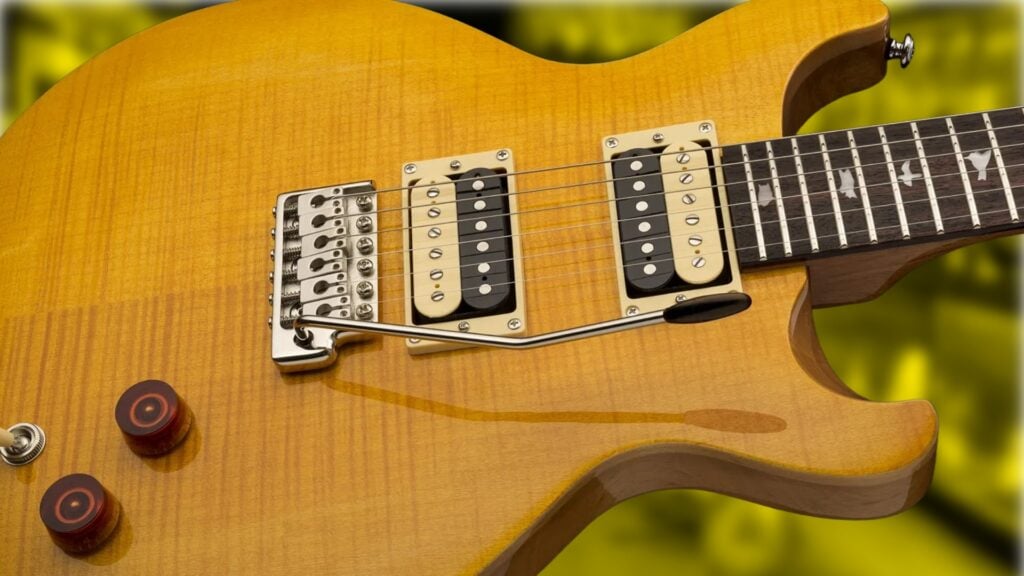
Mahogany body for warmth and depth
Maple top for clarity and snap
Flame veneer for that visual punch
It’s a formula that works across genres, but in this guitar, it’s tuned more toward a thicker, smoother voice rather than something overly bright or aggressive.
The Scale Length That Changes Everything
This is where things really start to separate the SE Santana from the rest of the PRS lineup.
Most PRS guitars run a 25-inch scale length. The Santana model comes in slightly shorter at 24.594 inches.
That might seem like a small difference, but it completely changes the feel.
Lower string tension means bends come easier. Notes feel softer under your fingers. You don’t have to fight the guitar to get expression out of it.
Tonally, that shorter scale leans into a warmer, thicker sound. You lose a bit of that high-end sparkle, but what you gain is a more vocal, mid-focused tone that sits beautifully in a mix.
If you’ve ever wondered why Santana’s playing feels so fluid, this is a big part of the equation.
Built for Sustain, Not Speed
The neck on the SE Santana follows that same philosophy.
It features a wide fat profile that fills your hand a bit more than a slim modern neck. It’s not designed for shredding at lightning speed. It’s designed for control, sustain, and connection.
That added mass actually contributes to the guitar’s ability to hold notes longer and respond more evenly across the fretboard.
You’re also getting 24 frets and a rosewood fretboard with PRS bird inlays, giving it that classic look while still staying true to Santana’s original vision.
Pickups That Stay Smooth Under Pressure
The Santana “S” humbuckers are voiced specifically for this guitar, and they lean into higher output without getting harsh.
They’re meant to be pushed.
Run this guitar into something like a Mesa Boogie style amp, and you’ll start to hear what it was built for. Singing sustain, controlled feedback, and a top end that stays smooth even when you crank the gain.
It’s that “liquid lead” tone people talk about, and it’s very real when you’re playing it.
A Guitar That Prioritizes Feel
One of the most interesting things about Santana’s approach to tone is how much he focused on feel over specs.
There’s a story about him using an extra-long guitar cable early in his career just to naturally roll off high-end before hitting his amp. That kind of thinking shows up in this guitar.
Every spec on the SE Santana points back to one goal. Make the guitar easier to play and more expressive once it’s in your hands.
Why It Still Holds Up
There are a lot of signature guitars out there that feel like marketing exercises. The SE Santana doesn’t fall into that category.
It represents the origin story of an entire brand. It captures a very specific approach to tone and playability. And it delivers it in a way that’s actually attainable for most players.
If you’re someone who values feel, smooth lead tones, and a guitar that gives a little more than it takes, this one is worth your time.
And honestly, it’s one of those guitars that makes way more sense once you plug it in and play it for yourself.