The Start Was Early, But The Path Was Not Typical
Like a lot of musicians, Ethan’s connection to music started young. He talked about singing as early as four years old and always finding his way back to music no matter what else he tried. Sports were there. Other interests came and went. But music stuck.
What is interesting about Ethan’s story is that his first serious step into performing did not come through starting a garage band or learning power chords in a basement. It came through choir, theater, and eventually a national tour of The Sound of Music when he was just 10 years old.
That kind of experience changes a kid. Touring the country that young, getting paid to perform, adjusting to travel, learning confidence onstage, and seeing what a creative life can actually look like is not something most people ever get to do, let alone before middle school. Ethan talked about that experience like someone who understood how rare it was. His parents made a big decision to support it, and it is obvious that choice helped shape everything that came after.
He also did voice acting, documentaries, auditions, and a handful of acting-related opportunities before the world shifted during Covid. That is when the focus started moving more heavily toward music.
When Covid Changed The Direction
Covid changed a lot of careers, especially for young creatives. For Ethan, it seems like that period forced a clearer sense of direction. Acting had already been part of his life, but music started taking over in a bigger way.
Not just listening to it. Not just playing it casually. Actually building a life around it.
He started leaning harder into performance, rock music, and the creative process behind the scenes. That matters because some artists love being onstage but do not care much about the technical side. Others are studio people who never want to perform. Ethan clearly loves both. He likes entertaining, but he also likes the details. He likes the energy of rock music, but he also likes the science of how tracks are built, mixed, shaped, and improved.
That combination is a huge part of what makes him stand out right now.
The Covers Are Not Just Covers
A lot of artists post covers online. That part is not new.
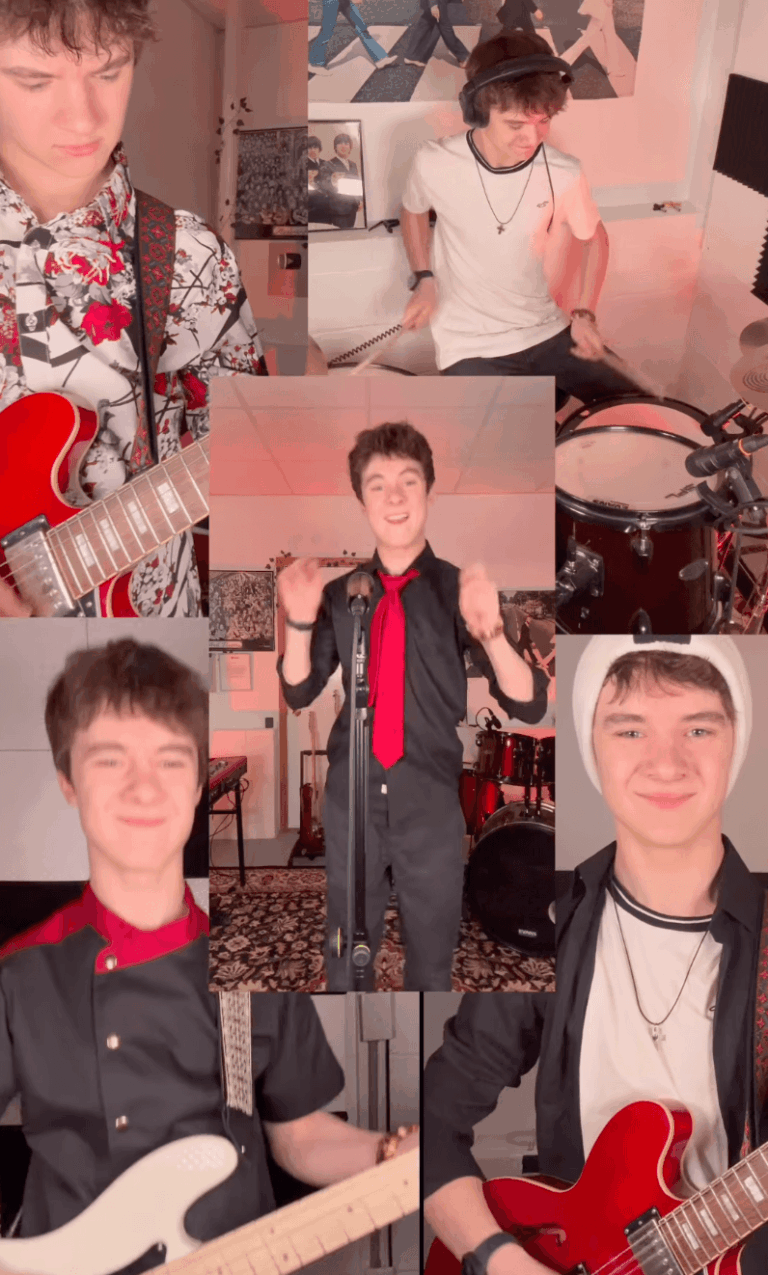
What Ethan is doing feels different because he is not just singing over an instrumental or filming a polished performance clip. He is turning each cover into a mini production. He records drums, then keys, then guitar, then vocals, and he is doing the video while he tracks. A lot of people assume he builds the finished song first and then goes back to film a music-video version of it. That is not how he does it.
He is actually recording the parts live as he captures the footage.
That means the final product is not just a content piece. It is basically the song being built in real time.
He walked through his setup during the episode, and honestly, it is the kind of thing musicians love hearing about. He uses a Focusrite Scarlett 18i20 interface, Logic Pro as his DAW, a practical mic setup for drums, and a whole lot of self-taught problem solving. He records in his basement, uses a TV as a visual reference while tracking, edits video in CapCut, and pays obsessive attention to consistency in the look and feel of what he posts.
That blue background in the videos is not random either. It became part of the brand once he realized it worked.
That is the part that really stuck with me. Ethan is not waiting for a manager, a label, a massive studio, or a perfect setup. He is paying attention, learning what connects, and adjusting in real time. That is a professional mindset, whether he calls it that or not.
Rock, Indie, Classic Influence, And A Modern Brain
One of the more fun parts of the conversation was hearing Ethan talk about what he actually listens to. On paper, someone his age could easily be expected to live entirely in current pop trends. Instead, his influences are all over the place in the best way.
He talked about loving bands and artists like The Strokes, The Beatles, and Dayglow, along with classic rock that came from his dad’s side of the musical equation. That mix makes total sense once you hear him talk. He clearly appreciates melody, energy, songwriting, performance, and tone. He is not trapped in one era, but he definitely respects the artists who shaped everything that came after them.
That also feeds into how he approaches covers. He is not just trying to copy songs note for note. He understands that when you perform for people, especially in a live setting, part of the job is making it your own while still giving the audience something familiar to connect with.
That awareness is rare at any age. At 18, it is a big deal.
Social Media Is Not The Goal, But He Knows How To Use It
Ethan has built a following of more than 50,000 people on Instagram, and he talked about that growth with the kind of honesty I appreciate. He did not pretend there was some magic formula. He knows there are insanely talented people online getting barely any attention. He also knows something about what he is doing is resonating.
Part of that is the one-man-band appeal. Part of it is that the videos are satisfying to watch. Part of it is consistency. Part of it is taste. And part of it is just that he is actually posting.
That last part matters more than people want to admit.
During the conversation, I kept coming back to this point: there are so many artists who spend years saying they are working on something. Ethan is just doing it. He is learning in public. He is experimenting in public. He is improving in public. He is not waiting until every idea is perfect to put something out.
That mindset alone is one of the biggest reasons he is already building momentum.